
Protect Your Health with Skin Cancer Screening & Mole Removal
Protect Your Health with Skin Cancer Screening & Mole Removal
Comprehensive Skin Cancer Screenings & Expert Mole Removal
Skin cancer is one of the most common cancers, but when detected early, it is highly treatable. Alongside regular screenings, mole removal is often recommended for growths that are suspicious, bothersome, or cosmetically unwanted. Our dermatology team provides thorough skin cancer checks and safe, effective mole removal procedures tailored to your needs
What’s Included in Skin Cancer & Mole Removal
During your visit, the dermatologist will:
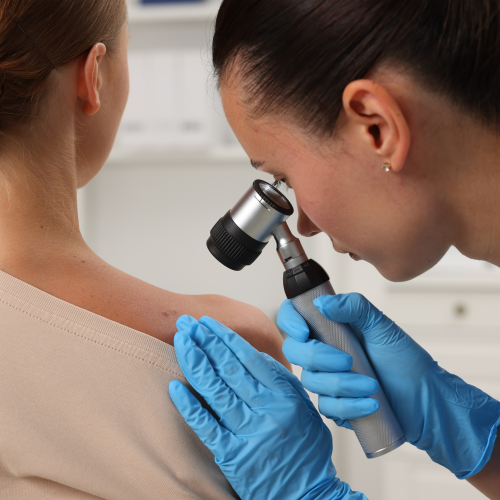
Perform a comprehensive full-body skin exam to detect suspicious lesions.
Assess moles for irregularities such as changes in color, size, or shape.
Recommend mole removal when necessary for medical or cosmetic reasons.
Perform removal procedures safely in-office, typically under local anesthesia.
Send removed tissue for biopsy, if medically indicated, to rule out cancer.
Types of Care
Skin Cancer Screening – A full-body evaluation to check for abnormal spots and detect skin cancer early.
Preventive Mole Removal – Removal of moles that are suspicious or carry a higher risk.
Cosmetic Mole Removal – Treatment of benign moles that may be bothersome or affect appearance.
How Often Should You Schedule Screenings?
Annually: A yearly skin exam is recommended for most adults.
Every 3–6 Months: For patients with prior skin cancer, numerous atypical moles, or strong family history.
Immediately: If you notice a mole that changes in color, size, or shape—or one that bleeds, itches, or looks unusual.

Benefits of Early Detection & Mole Removal
Improved Health Outcomes: Early cancer detection leads to higher cure rates.
Peace of Mind: Suspicious moles can be removed and tested to confirm diagnosis.
Cosmetic Confidence: Safe removal can improve appearance and reduce irritation.
Minimally Invasive: Procedures are quick, done in-office, and require little downtime.
Frequently Asked Questions (FAQs)
What are the main causes of skin cancer?
Excessive exposure to UV radiation, whether from the sun or tanning beds, is the primary cause of skin cancer.
What are the treatment options for advanced skin cancer?
Advanced skin cancer may require more aggressive treatments, including targeted therapy, immunotherapy, or chemotherapy. The best approach will depend on individual circumstances and should be discussed with a healthcare professional.
Can skin cancer be hereditary?
While most skin cancers are not hereditary, certain genetic factors can increase the risk of developing skin cancer.
Are all moles a sign of skin cancer?
No, not all moles are cancerous. However, any changes in size, shape, color, or texture of a mole should be evaluated by a dermatologist.
Is mole removal painful?
Mole removal procedures are typically performed under local anesthesia, ensuring minimal discomfort during the procedure. Some mild discomfort or soreness may be experienced during the recovery period.
What is the cost of mole removal?
The cost of mole removal can vary depending on factors such as the size and location of the mole, the chosen removal method, and the dermatologist’s fees. It is best to consult with a dermatologist for an accurate cost estimate.
Can moles grow back after removal?
While it is possible for moles to grow back after removal, it is relatively rare. The chances of regrowth can be minimized by ensuring complete removal of the mole and following proper aftercare instructions.

Dermatology and Skin Care Associates
Our mission at Dermatology and Skin Care Associates is to utilize the latest research and foremost procedures in combination with cutting-edge technology to offer you the most comprehensive medical and cosmetic dermatological care. Our priority is your best interest. We believe in addressing your concerns with a variety of solutions to find the one that best suits your needs.
Address:
7249 Liberty Way, West Chester, Ohio 45069
Phone:
Email:
Hours of Operation
Monday – Thursday:
8:00 am – 5:00 pm
Friday: 8:00 am – 4:00 pm


© 2025 All rights reserved Dermatology and Skin Care Associates - Powered by Practice Acceleration System